Intro
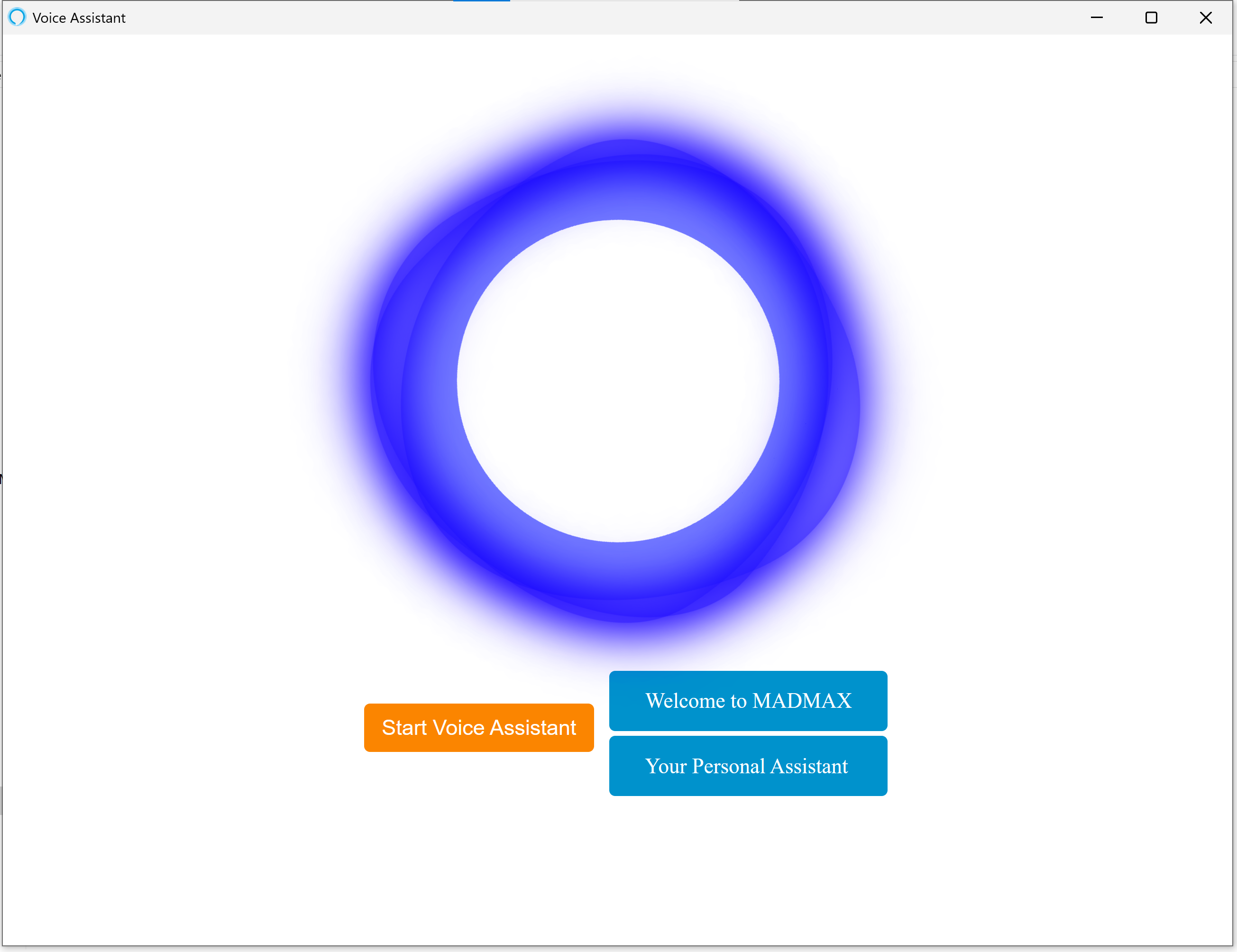
MadMax is an AI Enabled Voice Assistant leveraging neural networks, voice recognition, and NLP to help students quickly access and interact with their coursework using natural language. It provides a simple, conversational interface that makes learning more engaging, personalized, and efficient.
Students often face challenges such as limited access to personalized assistance, difficulty managing study time, and lack of engagement with course material. Traditional learning methods may not address these issues effectively, leading to decreased motivation and lower academic performance.
MadMax solves these challenges by providing a voice-based assistant that answers coursework-related queries, offers personalized guidance, and helps students manage their study time efficiently.
It allows students to interact naturally without navigating complex web pages or apps, making education more engaging, accessible and convenient.
🛠 Tech Stack
- Core: Python, Neural Networks, NLP
- Frontend: Electron, HTML, CSS, JavaScript
- Voice Processing: Speech-to-Text (STT) + Text-to-Speech (TTS)
- Data Handling: JSON for course metadata and structured responses
⚙️ How It Works
Flow
- Voice Input: User speaks a query related to coursework.
- Speech-to-Text: The system converts spoken language into text.
- NLP + Neural Network Processing: Text is analyzed to understand intent and fetch the correct response.
- Response Generation: The assistant retrieves course-related information or provides task management support.
- Voice Output: The system replies back in natural language, allowing hands-free interaction.
Key Features
- Provides time, date, and temperature updates.
- Performs Google searches.
- Scrapes Wikipedia and other sources for computer science content.
- Responds to queries related to coursework and study material.
- Acts as a dictionary for word meanings.
🚀 Final Thoughts
The AI Enabled Voice Assistant demonstrates how AI and NLP can enhance education by making coursework more accessible and engaging.
It provides a foundation for building intelligent, personalized study assistants that can be expanded to cover more subjects and courses like Arts, Finance, Management and more, integrate with online resources, and further support time management.
Future improvements could include expanding the course knowledge base, integrating multi-modal dialogues with visual inputs/outputs, and advancing NLP capabilities for more accurate responses.